An independent guide to modern product liability
When a product fails, follow the evidence.
Understand modern product liability. From physical components to software and AI, connect the defect, the damage and the people responsible.
Find your starting point
Follow the question.
From the product itself to the records that explain what happened, choose the part of the story you need.
Software Product Liability Explained
Software can be a product in its own right or a component of another product. Liability still requires the applicable scope, a safety defect, covered damage, causation and an actor liable under the framework.
Open topic guide02 / Defectiveness and expected safetyWhen Is a Product Defective?
Defectiveness concerns expected or legally required safety, assessed in all the circumstances. Product failure, a recall or a newer design does not alone establish a compensation claim.
Open topic guide03 / Economic operators and responsibilityWho Can Be Liable for a Defective Product?
Manufacturer, component and EU market roles have different liability conditions. Map the legal entities and product history before assessing responsibility.
Open topic guide04 / Evidence & proofEvidence in product-liability investigations
Useful evidence links the product and its state to the alleged defect, the damage and the responsible actor. Preservation and explanation matter as much as collecting a large quantity of files.
Open topic guide05 / Covered harmDamage and compensation
Article 6 defines the damage categories covered by the new Directive. The right to compensation does not extend to every product-related loss, and other legal regimes may cover different losses.
Open topic guide06 / Country layerNational implementation and jurisdiction
The Directive must be transposed through Member State law. Directive-level rules, an implementing act and the national procedural framework need to be kept separate.
Open topic guideAn illustrative evidence trail
One product.
Several questions.
A connected device, a changed release, an incident. Follow the records through three stages of an investigation.
Establish the product state
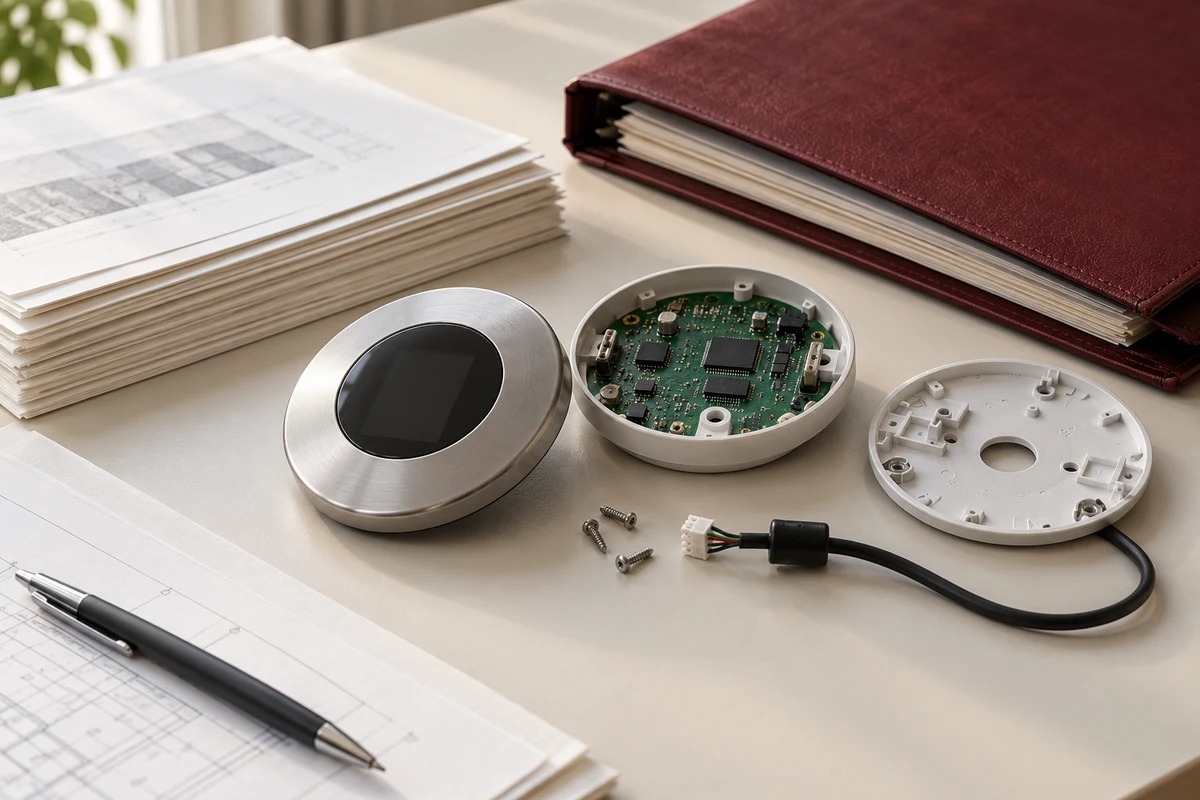
Connected temperature controller
Identify the hardware, embedded software and digital services. Connect each component to its supplier and the version present at the incident.
- PRODUCT RECORDModel · batch · market date
- COMPONENT RECORDSupplier · revision · integration
- SOFTWARE RECORDRelease · configuration · control
Reconstruct the change
A release alters device behaviour.
Preserve the before and after versions, the approval and the rollout. Separate a reported symptom from a demonstrated safety defect.
- BEFOREVersion 2.3 · baseline tests
- CHANGEVersion 2.4 · signed approval
- AFTERIncident-time logs · configuration
Connect records to questions
What can the evidence establish?
Build the failure mechanism and investigate alternative explanations. Keep the alleged defect, harm and causal connection distinct.
- DEFECTSafety assessment · testing
- DAMAGEContemporaneous harm records
- CAUSATIONMechanism · alternatives · limitations
Look a little closer
The details make a difference.
Manufacturer Control After a Product Is Sold
Manufacturer control can persist through authorised components, modifications and an ability to supply updates. The legal definition requires more than ownership or a generic support label.
Rebuttable presumptions
The new Directive uses presumptions to address particular evidential problems. Defectiveness and causation are separate issues, and the relevant presumptions are conditional and rebuttable.
Software Version History as Liability Evidence
Version history connects releases, configuration, dependencies and activation to the incident-time state. Its evidential value depends on provenance and the link to the actual product, rather than the length of a change log.
Clear sources. Clear limits.
A resource you can inspect.
Read the source references and the limits of each explanation. Illustrative examples are labelled throughout.